External Hard Drives Explained: Uses, Benefits, and Basics

What Is an External Hard Drive?
An external hard drive is a portable storage device that connects to a computer via USB, Thunderbolt, or other data transfer interfaces. Unlike internal drives, external hard drives are housed in their own protective enclosures, offering portability, ease of use, and additional storage space without the need to open up a computer case.
Primary Uses of External Hard Drives
1. Data Backup and Recovery
One of the most common uses of external hard drives is data backup. Individuals and businesses alike use these drives to:
Protect valuable data from system failures or accidental deletion
Create scheduled backups with software like Time Machine (macOS) or Windows Backup
Restore files quickly in case of ransomware attacks or hardware malfunctions
2. Portable Storage for On-the-Go Access
External hard drives allow users to carry large volumes of data conveniently. Whether it's high-resolution videos, large design files, or massive databases, an external drive ensures your data goes wherever you do.
3. Media Libraries
Photographers, videographers, and content creators often use external drives to store media libraries. With storage capacities reaching multiple terabytes, these drives can hold:
Thousands of high-resolution images
Hours of 4K video footage
Entire music or movie collections
4. Gaming Expansion
Gamers use external hard drives to expand storage on consoles like PlayStation, Xbox, and gaming PCs. With modern games occupying over 100GB each, an external drive prevents storage constraints and allows smoother gameplay by offloading non-essential files.
5. Secure and Encrypted File Storage
For professionals dealing with sensitive information, external hard drives provide a secure environment with password protection and hardware encryption. This is crucial for:
Legal documents
Financial data
Medical records
Corporate intellectual property
Types of External Hard Drives
1. Hard Disk Drives (HDDs)
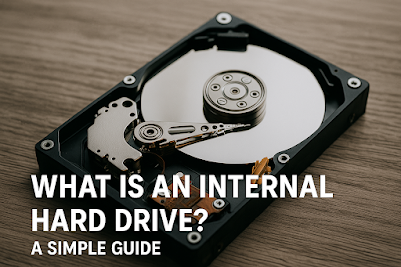
HDDs use spinning magnetic platters to read and write data. They offer:
High capacity at affordable prices
Slower read/write speeds compared to SSDs
Great for media storage, backups, and general data archiving
2. Solid-State Drives (SSDs)
SSDs store data on flash memory, providing:
Ultra-fast data transfer speeds
Better durability and shock resistance
Lightweight and silent operation
Ideal for frequent data access and editing
3. Hybrid Drives (SSHDs)
Combining the features of both HDDs and SSDs, SSHDs offer:
A balance between speed and capacity
Lower cost than pure SSDs
Enhanced performance over traditional HDDs
Key Features to Look for in an External Hard Drive
1. Storage Capacity
External drives come in a variety of sizes, from 500GB to over 20TB. Choose the right capacity based on your needs:
500GB to 2TB – Ideal for everyday documents and media
2TB to 6TB – Suitable for advanced users with larger storage needs
6TB+ – Great for enterprise-level backups, video editing, and server offloading
2. Transfer Speed
Transfer speed depends largely on the interface and drive type:
USB 3.2 Gen 1/2 or USB-C – Offers fast and reliable data transfer
Thunderbolt 3/4 – Excellent for professional editing and massive file transfers
HDDs – Around 100–150 MB/s
SSDs – Often over 500 MB/s, with NVMe SSDs reaching over 1000 MB/s
3. Compatibility
Ensure your external hard drive is compatible with your operating system:
Most modern drives are formatted for Windows (NTFS) or macOS (HFS+ or APFS)
ExFAT formatting allows cross-platform use
Some drives come preloaded with reformatting utilities for both systems
4. Durability and Build Quality
For users on the move, consider:
Shockproof casing
Water and dust resistance (IP ratings)
Solid metal or rugged enclosures
5. Security Features
For professional-grade data protection, choose a drive that offers:
Hardware encryption (AES 256-bit)
Biometric authentication (e.g., fingerprint scanners)
Password-protected access
Benefits of Using an External Hard Drive
1. Cost-Effective Storage Expansion
Upgrading internal storage is often expensive and complex. External drives offer a budget-friendly alternative with easy plug-and-play functionality.
2. Enhanced Portability
Modern external drives are slim, lightweight, and easily fit into a laptop bag or backpack. You can access your files wherever you go without relying on cloud access.
3. Improved Performance
By offloading large files from your internal drive, you can enhance your system’s speed and efficiency. This is especially true for video editors, software developers, and creative professionals.
4. No Internet Dependency
Unlike cloud storage, an external hard drive doesn't require an internet connection. You maintain complete control over your data and can access it anytime, anywhere.
5. Data Privacy and Control
Using a local external drive eliminates concerns over data breaches or third-party access. Sensitive information remains offline and under your full control.
Top Use Cases by Profession
1. Creative Professionals
High-speed SSDs for real-time editing
Large HDDs for archiving raw footage and photos
2. Business Owners
Secure backup of customer databases
Redundancy solutions with RAID-compatible drives
3. Students
Portable drives for assignments, projects, and personal media
Budget-friendly options with 1–2TB capacities
4. IT Specialists
System image backups
OS cloning and deployment
Recovery drives for diagnostics and repairs
Tips for Maintaining Your External Hard Drive
Eject safely every time to prevent data corruption
Run regular disk checks and defragmentation (HDDs only)
Keep firmware and security software up to date
Avoid physical damage by using a padded case
Don’t overload the drive; maintain at least 10–15% free space
Conclusion: Is an External Hard Drive Worth It?
Absolutely. Whether you’re a student, professional, or casual user, investing in an external hard drive enhances your data storage capabilities, improves system performance, and offers peace of mind through reliable backups. With the right device, you can manage, move, and protect your files with maximum efficiency and minimal hassle.


Comments
Post a Comment