The Ultimate Guide to Server Hard Drives: Everything You Need to Know

In a world where data powers everything from small businesses to massive enterprises, server hard drives play a critical behind-the-scenes role. They're the backbone of your network’s storage, ensuring your systems run smoothly, securely, and efficiently. Whether you're building a simple office server or managing a full-scale data center, picking the right hard drive can make a big difference in speed, reliability, and long-term performance. In this guide, we’ll break down everything you need to know—clearly and in detail—so you can make smart, informed decisions about your server storage.
What is a Server Hard Drive?
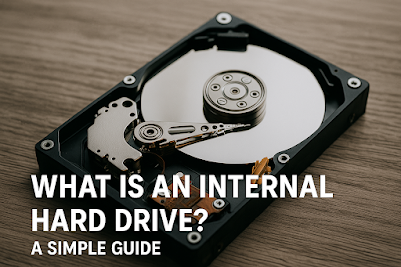
A server hard drive is a high-performance, enterprise-grade storage device designed to handle large volumes of data with consistent uptime, durability, and fast read/write speeds. Unlike desktop drives, these are engineered for 24/7 operation, redundancy, and greater workload endurance.
Types of Server Hard Drives
1. HDD (Hard Disk Drive)
Mechanical hard drives remain widely used in server environments for their cost-effectiveness and large storage capacities. They are ideal for:
Cold storage
Archiving
Backup systems
Key features include:
High capacity options (up to 20TB+)
Lower cost per GB
Slower read/write speed compared to SSDs
2. SSD (Solid State Drive)
Solid State Drives offer lightning-fast performance and are the go-to choice for high-speed data access.
Advantages:
Fast boot times
Superior IOPS (Input/Output Operations Per Second)
Silent operation and no moving parts
Lower latency
SSDs are best for:
Databases
Virtualization
High-transaction environments
3. NVMe Drives
NVMe (Non-Volatile Memory Express) drives are the elite performers in the server world, leveraging the PCIe interface for unmatched speed.
Benefits:
Massive throughput—multiple GB/s
Extreme IOPS
Ideal for AI, ML, and big data analytics
These drives are more expensive but provide a significant performance edge for critical applications.
SATA vs SAS vs NVMe: Interface Comparison
SATA (Serial ATA)
Cost-effective
Up to 6 Gbps transfer rate
Common in entry-level servers
Compatible with both HDDs and SSDs
SAS (Serial Attached SCSI)
Designed for enterprise use
Up to 12 Gbps or more
Dual-port for redundancy
Higher durability and endurance
NVMe (Non-Volatile Memory Express)
PCIe-based interface
Up to 32 Gbps (and increasing)
Designed for ultra-fast data access
Best suited for mission-critical workloads
Key Specifications to Evaluate
When selecting a server hard drive, it’s essential to look at more than just capacity. Consider the following specifications:
1. RPM (Revolutions Per Minute) – For HDDs
7,200 RPM – Standard performance
10,000 RPM – Enhanced read/write speeds
15,000 RPM – High-performance applications
2. MTBF (Mean Time Between Failures)
Measures reliability
Enterprise drives offer 1.2 to 2.5 million hours MTBF
Look for drives with low failure rates
3. Workload Rate Limit (WRL)
Specifies the total amount of data a drive can handle annually
Enterprise-grade drives offer up to 550 TB/year
4. Endurance & DWPD (Drive Writes Per Day)
Especially important for SSDs
Higher DWPD = better durability
RAID Compatibility & Redundancy Features
Server hard drives must be RAID compatible to ensure data redundancy and uptime.
Popular RAID configurations:
RAID 0 – Performance, no redundancy
RAID 1 – Mirroring
RAID 5/6 – Striping with parity
RAID 10 – Combines mirroring and striping
Look for drives with RAID firmware optimization and TLER (Time-Limited Error Recovery) to maintain array integrity.
Form Factors and Bays
Server hard drives come in various form factors. The most common include:
3.5-inch – Used for large-capacity HDDs
2.5-inch – Common for SSDs and SAS drives
U.2 / M.2 / EDSFF – Used for high-speed NVMe drives
Ensure your server chassis supports the drive bay configuration you're planning to deploy.
Use Cases by Drive Type
Enterprise HDDs
Best for: Data archiving, backups, low-access storage
Example: Western Digital Ultrastar, Seagate Exos
Enterprise SSDs
Best for: Read-intensive and transactional databases
Example: Samsung PM1733, Intel D3-S4510
NVMe Drives
Best for: Real-time analytics, AI/ML, virtualized environments
Example: Micron 9300, Kioxia CM6
Best Practices for Server Hard Drive Deployment
Use only enterprise-grade drives – Consumer drives are not built for server workloads.
Plan for redundancy – Always use RAID or similar for fault tolerance.
Monitor drive health regularly – Use SMART tools and server management software.
Keep firmware updated – Manufacturers often release critical stability improvements.
Ensure proper cooling and airflow – Overheating shortens drive lifespan.
Emerging Technologies and Trends
As data demand continues to surge, new server storage technologies are pushing boundaries.
ZNS (Zoned Namespace SSDs) – Optimizes data placement for performance and lifespan.
E1.S/E1.L form factors – Designed for space-efficient hyperscale storage.
HAMR (Heat-Assisted Magnetic Recording) – Increases HDD density to 30TB+.
Computational Storage – Drives that process data at the storage level to reduce latency.
Staying informed about these innovations can give your infrastructure a future-proof edge.
Top Server Hard Drive Brands
Trusted manufacturers include:
Seagate
Western Digital (WD)
Toshiba
Samsung
Micron
Intel
Kioxia
When selecting, always check for enterprise warranties, vibration tolerance, and manufacturer support options.
How to Choose the Right Server Hard Drive for Your Needs
Making the right decision depends on several factors tailored to your unique server workload. Below are strategic considerations to guide your selection process.
1. Define Your Workload Type
Different workloads demand different drive attributes:
Transactional Workloads (e.g., SQL databases): Require high IOPS and low latency – opt for NVMe or enterprise SSDs.
Cold Storage and Backups: Focus on large-capacity HDDs with good MTBF and low cost per GB.
Virtualized Environments: Need balanced performance and reliability – use high-end SSDs or SAS drives.
Media Streaming or File Hosting: Benefit from high-capacity SATA HDDs with RAID configurations.
2. Assess Read/Write Intensity
Determine if your applications are read-heavy, write-heavy, or mixed-use:
For read-heavy workloads, go with read-optimized SSDs.
For write-intensive tasks, invest in high DWPD SSDs or NVMe drives with strong endurance metrics.
3. Consider Uptime Requirements
If you’re running a mission-critical application, downtime can be costly.
Choose drives with enterprise-level warranties (5 years or more)
Look for hot-swappable and redundant power/cooling support
Use RAID 10 or similar for redundancy with performance
4. Plan for Scalability
As your organization grows, so will your data needs.
Ensure your drive bays and controller cards support future upgrades
Consider modular NVMe architectures or expansion chassis
Use cloud integration for hybrid setups when on-premise storage maxes out
Conclusion
Selecting the right server hard drive is pivotal to your infrastructure’s speed, reliability, and scalability. Whether you're optimizing for capacity, performance, or endurance, understanding the types, interfaces, and use cases will empower your decisions.
Invest in quality hardware, configure with care, and maintain proactively. Your data—and your users—depend on it.


Comments
Post a Comment